
What repointing helps you avoid
Less moisture entry
Renewed joints help reduce the paths through which rain can work into the wall face.
Better wall appearance
Matched mortar colour and profile help the repaired area sit more naturally with the rest.
Protection for the bricks
Compatible mortar helps shield the masonry instead of forcing the bricks to take the strain.
Renew the joints before bricks suffer
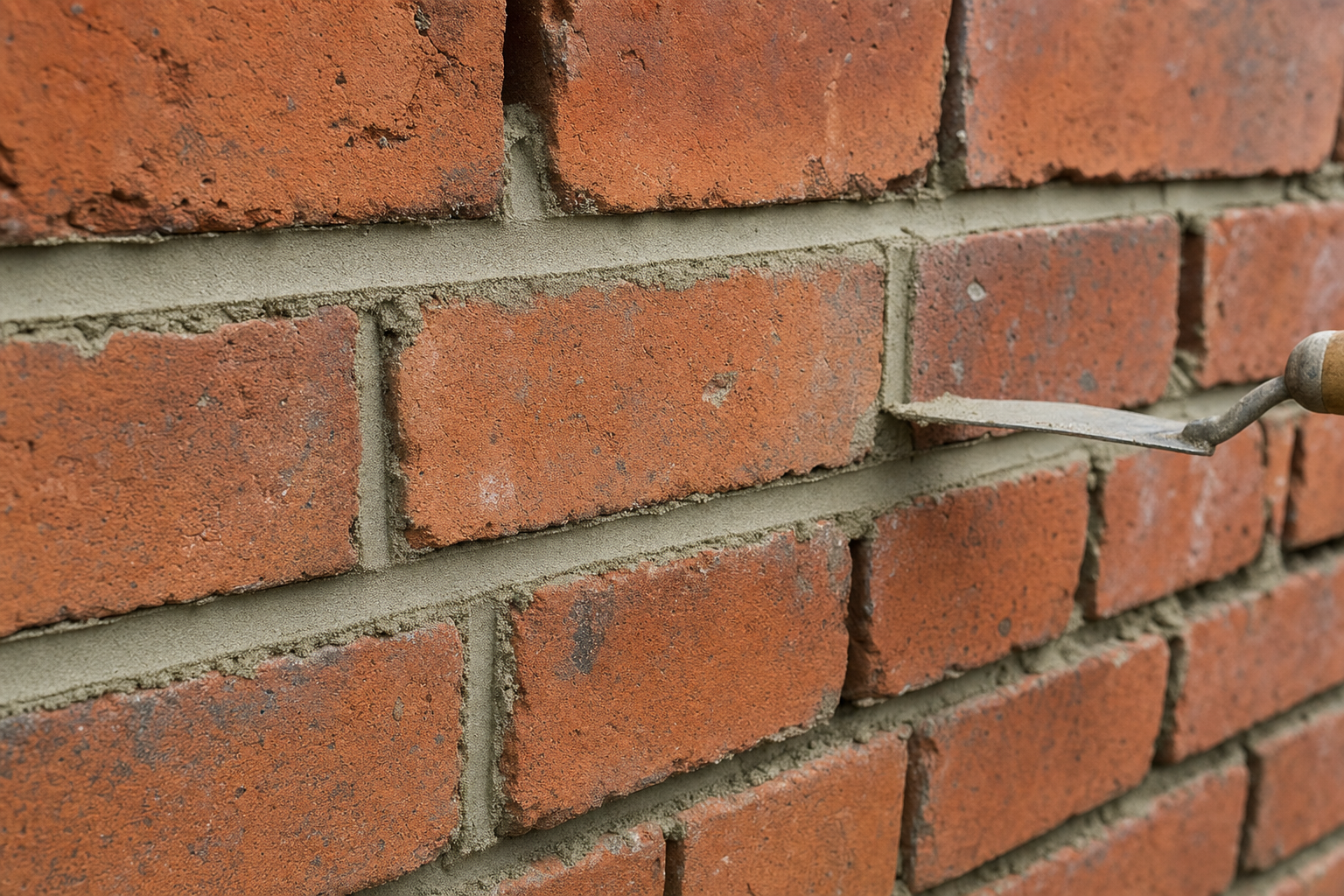
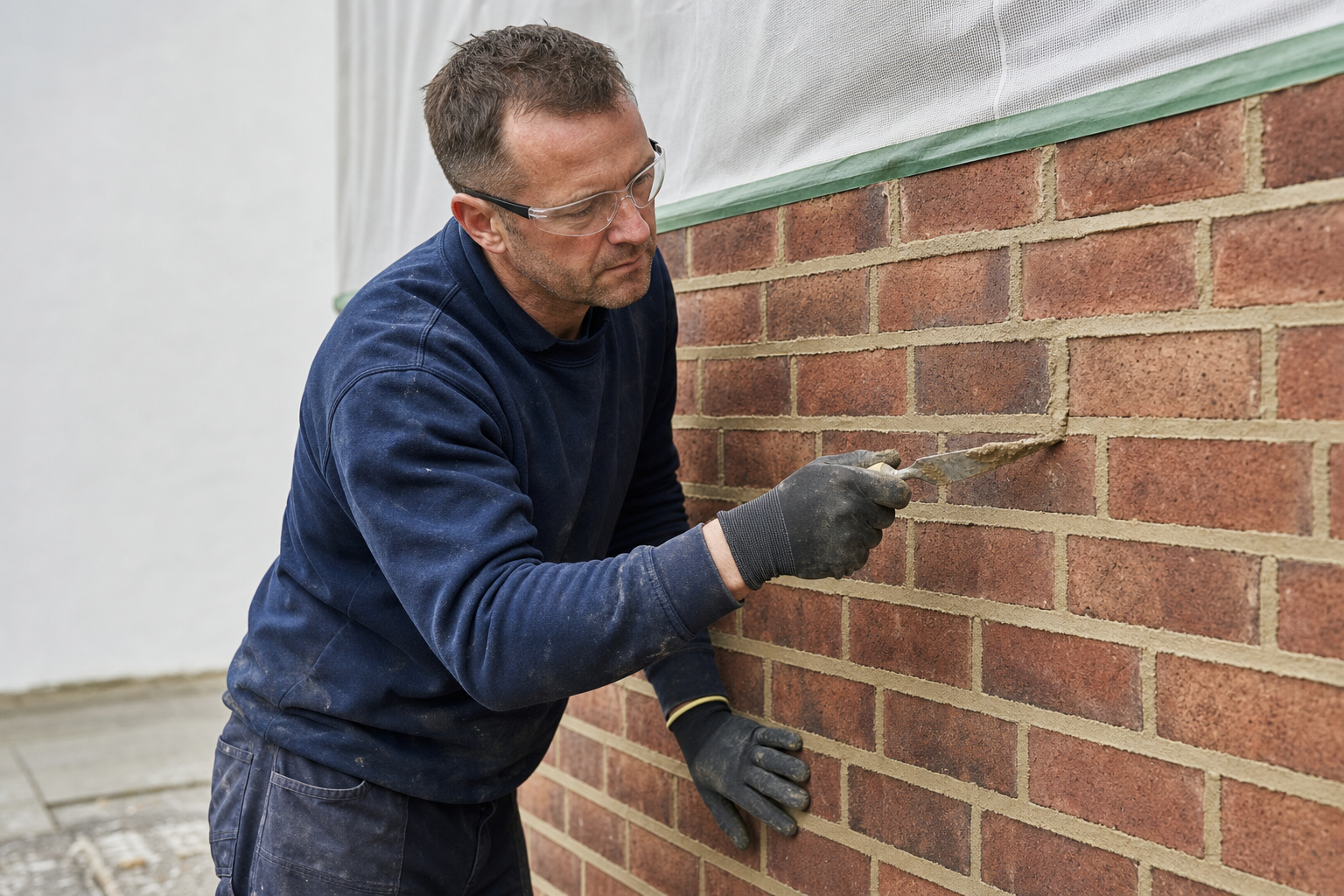
Mortar joints do more than fill the gaps. When they erode, crack or fall away, moisture has an easier path into the face of the wall and the exposed masonry is left taking more of the strain. Repointing deals with that early, before tired joints become a bigger repair. When you contact D & T Builders, we assess how far the mortar has failed and how the wall is performing as a whole. The process usually involves removing deteriorated mortar to a suitable depth, cleaning the joints, applying compatible new mortar and finishing the profile to suit the established brickwork. Done properly, it helps the wall shed weather better and look more cared for too.
Matching matters as much as the repair
The new mortar has to work with the masonry, not fight against it. Colour, texture and joint style all affect the finished look, but compatibility matters just as much because the wall still needs to manage moisture in a sensible way. With D & T Builders, we keep an eye on both appearance and performance. Careful curing, protection from poor weather and controlled cleaning are part of the job as well, because rushing the final stages can spoil good repointing and leave you paying for neatness that never arrived.
Frequently asked questions
How do I know if my brickwork needs repointing?
Common signs include cracked, loose or missing mortar, joints that look hollowed out and walls that stay damp for longer than they should. If the mortar is failing, it is worth addressing before the brick faces begin to suffer or the wall starts needing more than joint renewal.
Can new mortar be matched to existing joints?
We look at the colour, texture and profile of the established mortar so the repointed area sits better with the rest of the wall. On older brickwork, an exact match is not always possible, but a careful choice gives a far more settled finish than using the nearest ready-mix guess.
Why does repointing need time to cure properly?
Fresh mortar needs suitable conditions to gain strength and settle well in the joints. If it is rushed, badly exposed or cleaned too aggressively, the finish can weaken or spoil. Curing and protection are part of the repair, not an optional extra tagged on at the end.