
Why finish work needs proper prep
Cleaner decoration base
Well-prepared plaster gives paint and final finishes a far better surface to sit on.
Protected exterior surfaces
Suitable rendering helps shield outside walls while improving the overall look of the home.
Neater edges and junctions
Careful work around reveals, corners and joins helps the whole surface look more settled.
Smooth rooms and protected outside walls
Plastering and rendering may sound similar, but they do different jobs. Internal plastering creates smooth, decoration-ready walls and ceilings. External rendering protects outside surfaces while giving the property a clean, finished appearance. We deal with both, while treating each one according to where it sits and what the surface needs. When you bring D & T Builders in, we start with the background rather than the top coat. Loose material has to come away, suction needs controlling and beads or reinforcement may be needed to keep edges, corners and wider areas sound. A tidy finish begins with preparation, not wishful thinking and a trowel.
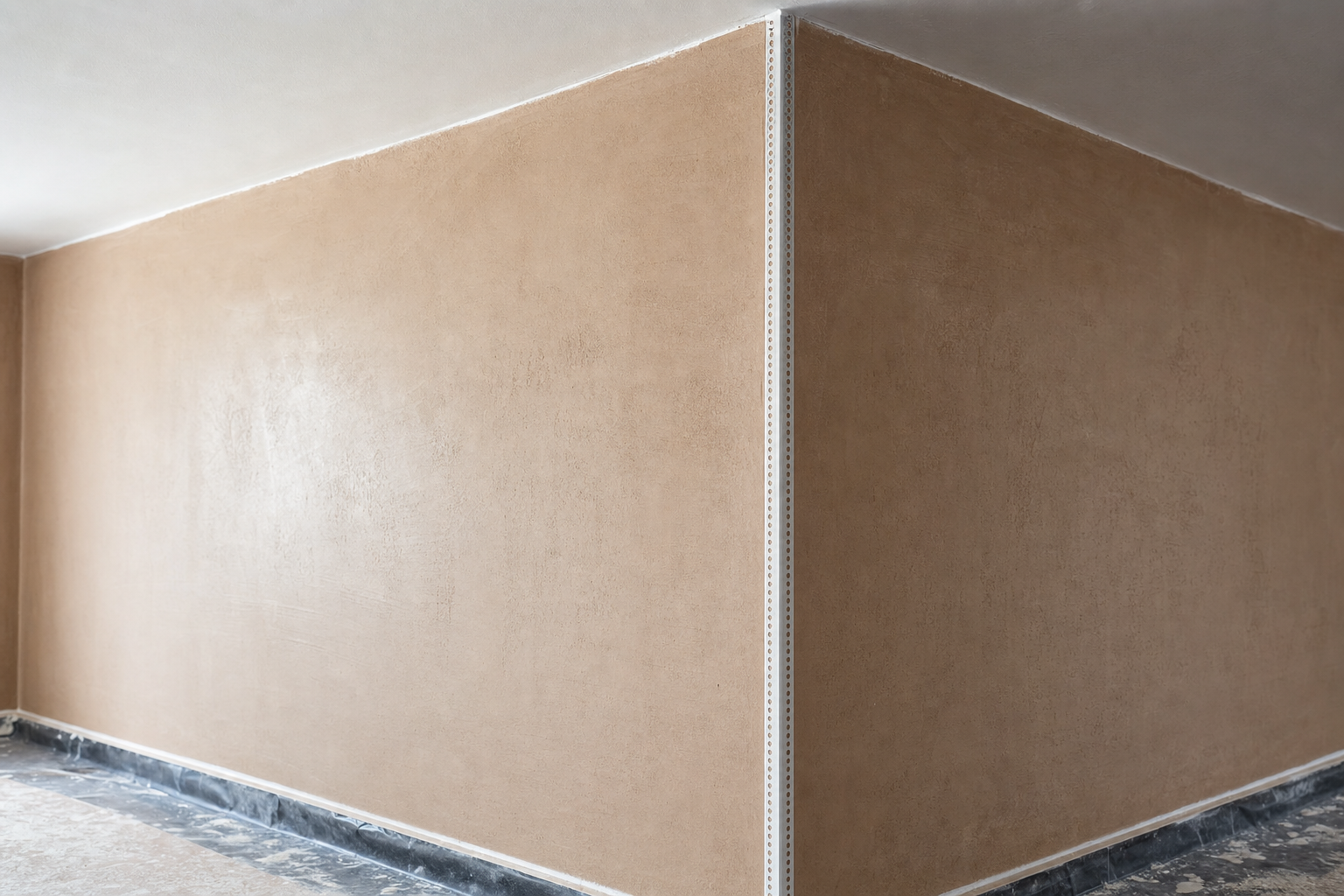

Details that shape the finished surface
The awkward parts tell you a lot about the standard of the work. Corners, reveals, junctions and changes of material need careful handling if the finished surface is going to look consistent. With D & T Builders, we can skim repaired areas, resurface larger internal spaces and apply suitable external render finishes to match the property and the exposure. We also explain drying time, ventilation and weather protection, so you know when a surface is ready for decoration and when it still needs a bit of patience rather than another layer piled on too soon.
Frequently asked questions
When can fresh plaster be decorated?
Fresh plaster needs time to dry properly before decoration begins. The exact timing depends on the thickness, the background and the conditions in the room, especially ventilation. Rushing to paint too early can affect the finish, so we explain when the surface is ready to move on.
Can damaged render be repaired instead of replaced?
In many cases, yes, but it depends on how far the problem extends and whether the background is still sound. Local repairs may suit isolated damage, while more widespread hollow, cracked or loose render can point to a larger area needing attention rather than a simple patch.
How do you prepare uneven or damaged surfaces?
Preparation depends on what is underneath. Loose material is removed, suction is controlled and beads or reinforcement are used where needed. The aim is to create a sound background before the finish goes on, because even the smoothest skim cannot hide a substrate that is failing beneath it.