
What a proper flat roof repair addresses
Awkward leak paths
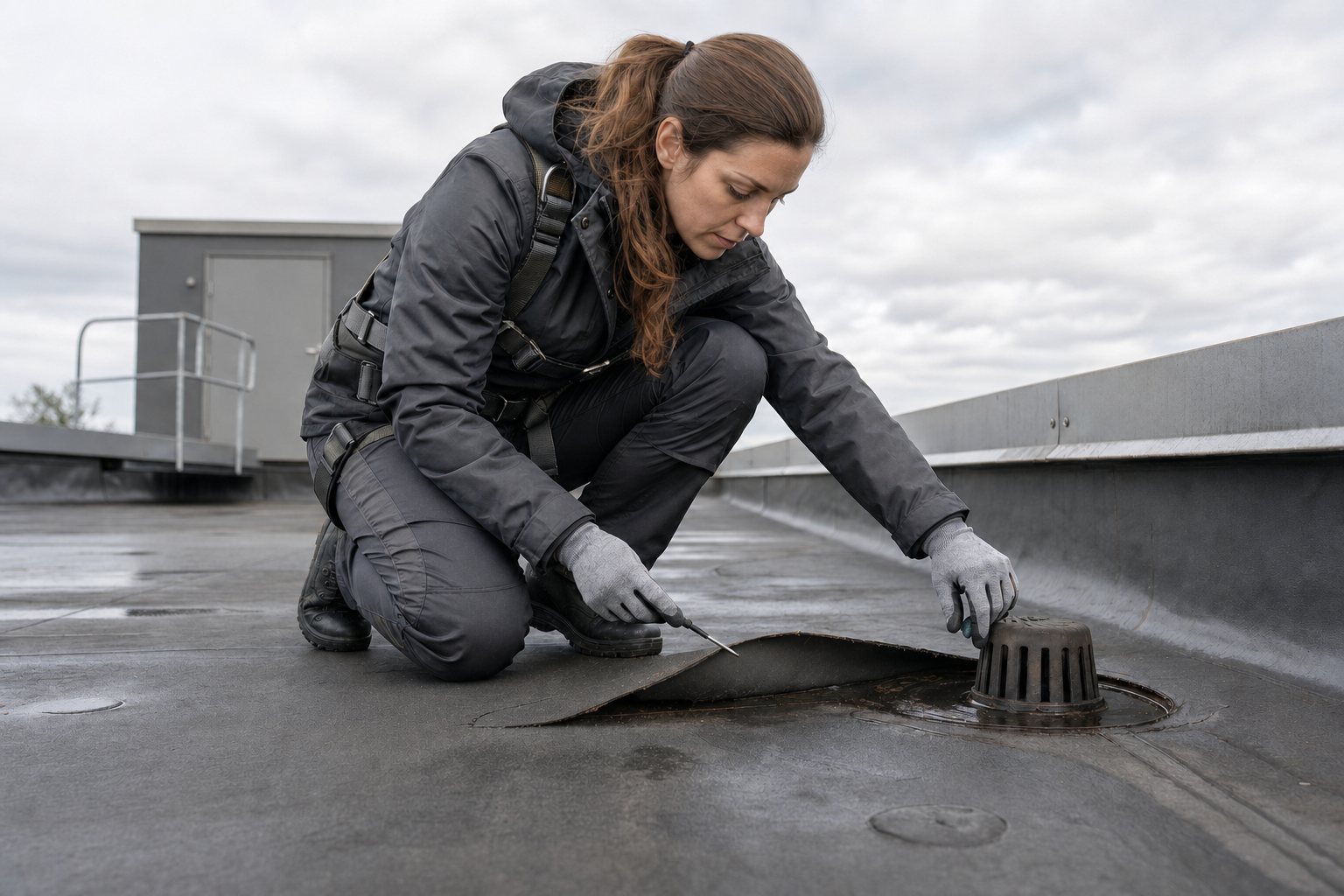
We inspect seams, outlets and edges as well as the open roof surface to trace the problem.
Roof-specific repair work
The repair is shaped around felt, membrane or liquid surfaces rather than guessed from ground level.
Drainage concerns
Falls and outlets are reviewed because standing water can undo even a tidy-looking patch.
Flat roof leaks rarely stay in one neat spot
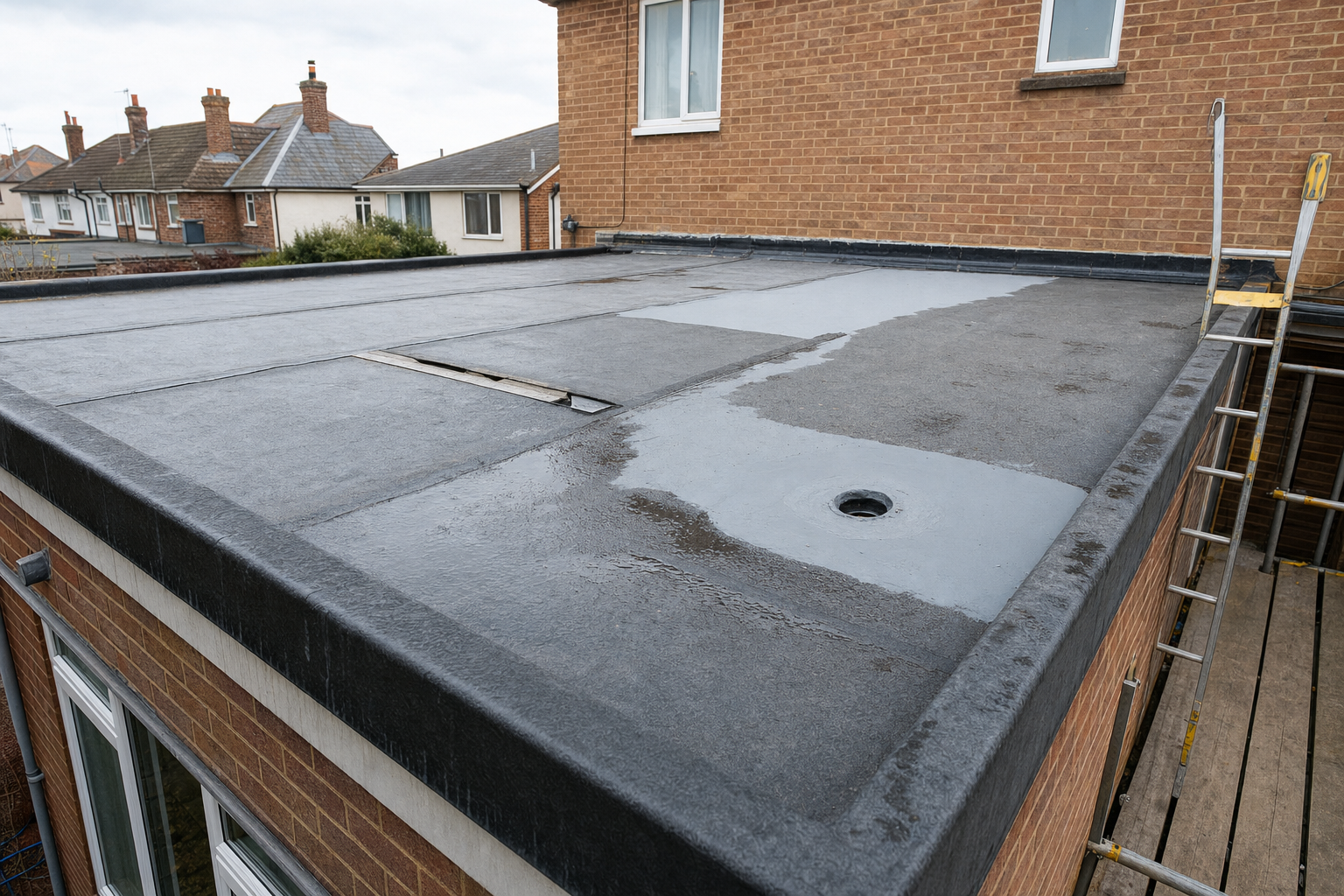
Flat roofs have a talent for making a small leak seem like a mystery novel. Water can work in around seams, edges, upstands, outlets and roof penetrations, then show itself somewhere less helpful indoors. We repair flat roofs by tracing the likely entry point and checking the main roof surface for signs such as splits, blisters, lifting material, standing water and failed flashing details. When you bring D & T Builders in, we look at the detail work as closely as the open roof area, because a sound-looking surface still fails if the edges or drainage points have given up. The aim is to stop the leak and reduce the chance of it finding the same route again.
Repairs shaped by the roof type and damage
Not every flat roof needs the same answer. The condition of the covering and the extent of the damage help decide whether a local patch, a renewed detail or a larger section repair makes most sense. With D & T Builders, we take that judgement from the roof in front of us, whether the surface is felt, membrane or liquid-applied. Falls, outlets and watertight edge details are part of the assessment too, because if water is left standing or trapped, the repair is working against the same problem that caused the trouble in the first place.
Frequently asked questions
Where do flat roof leaks usually start?
Common trouble spots include seams, edges, upstands, outlets and penetrations where the roof surface is interrupted. The main field of the roof can also split, blister or lift. Because water can travel before it shows inside, the visible damp patch is not always the true starting point.
Can a flat roof leak be repaired without replacing the whole roof?
Often, yes, if the issue is local and the wider roof remains sound. A patch or renewed detail may be enough. Where damage is more widespread, or the surface and drainage details are failing together, a larger repair area may be the more sensible and lasting route.
Why are falls and outlets checked during repair work?
A roof that cannot move water away properly is always more likely to suffer repeat problems. Blocked or poorly detailed outlets and weak falls can leave standing water on the surface, so looking at drainage is an important part of solving the leak rather than simply dressing it up.