
What precise carpentry changes
A better fit
Accurate measuring and cutting help timber meet walls, floors and openings without the usual fuss.
Timber that suits the job
Material choice is guided by strength, moisture conditions and the finish you want in the room.
Cleaner final details
Careful sequencing helps protect finished woodwork from damage by later stages of the build.
Timber work that fits the building
Carpentry has a habit of showing the truth. If the measuring is off, the cut is wrong or the fit is lazy, the room tells on it every time you open the door or glance along a skirting line. We handle both first-fix and second-fix carpentry, covering the concealed structural timber work that supports the build as well as the visible finishing details that make the room feel complete. When you choose D & T Builders, we look at where the timber meets floors, walls, openings and existing features, because that is where accurate cutting and fitting make the biggest difference. Door frames, internal doors, skirting, architraves and timber supports all rely on careful setting out.
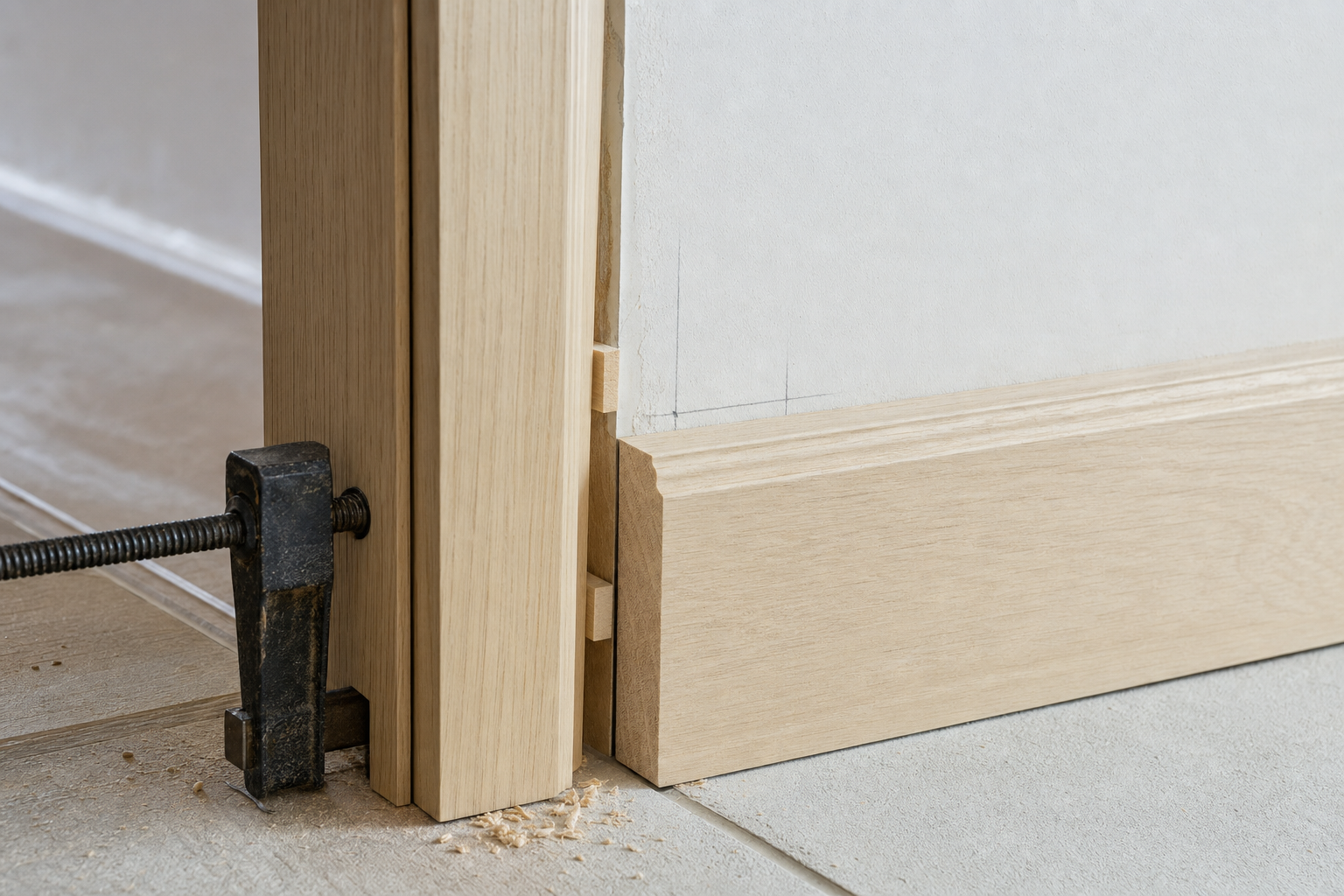
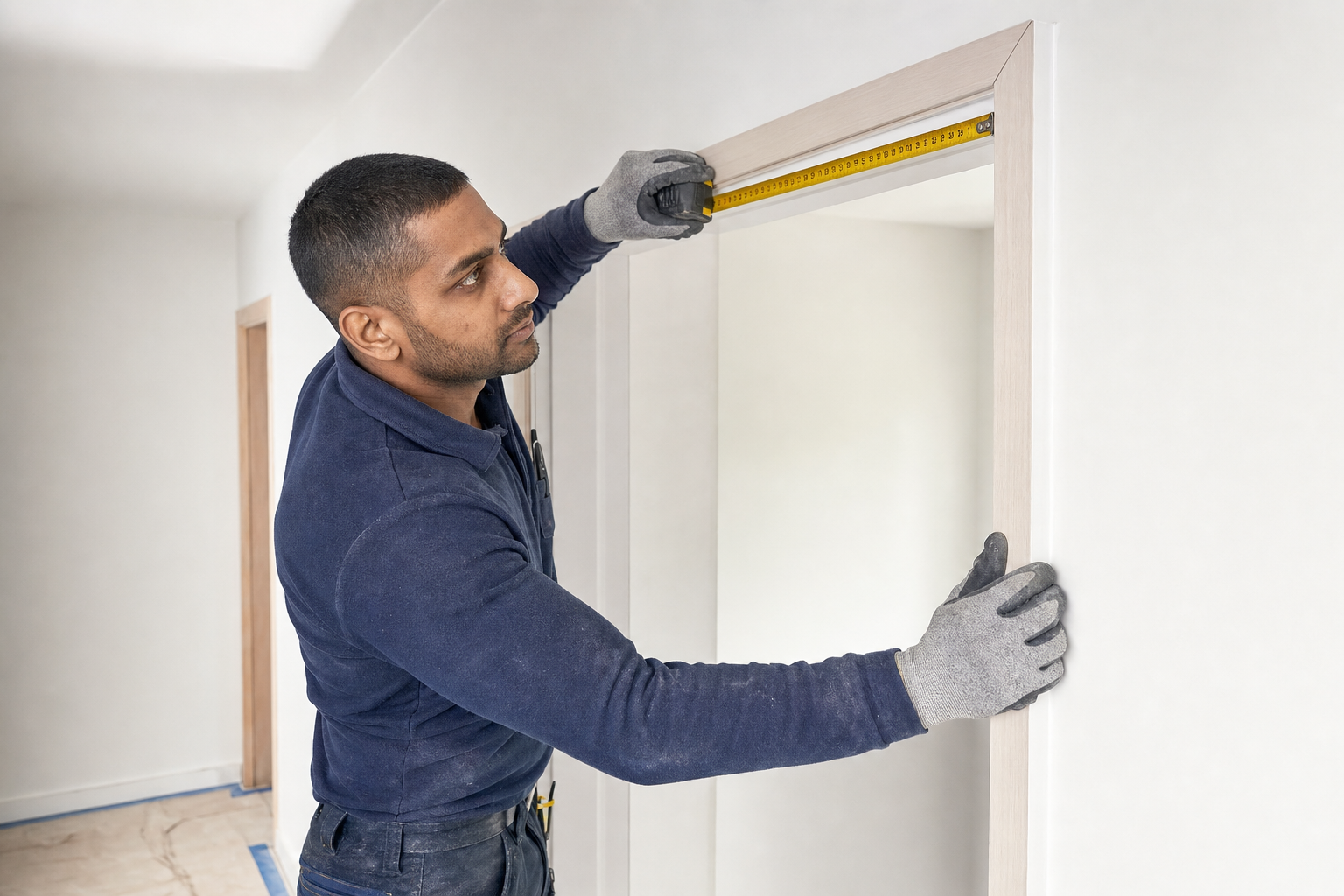
The right timber at the right stage
Timber choice is not only about appearance. Strength, moisture conditions and the final finish all matter, especially where the wood forms part of the structure or has to sit cleanly against fresh plaster and existing surfaces. With D & T Builders, we also keep an eye on timing. Carpentry needs to follow the broader building sequence so finished elements are not spoiled by later work and awkward junctions are dealt with before they become the thing you notice first in the room. Good joinery should look straightforward when it is done, which usually means plenty of care beforehand.
Frequently asked questions
What is the difference between first-fix and second-fix carpentry?
First-fix carpentry covers the structural or concealed timber work completed before surfaces are finished. Second-fix carpentry is the visible fitting that comes later, such as doors, skirting and architraves. Both matter, but they happen at different points in the building sequence.
Can carpentry be fitted after plastering?
Yes, many visible finishing elements are fitted after plastering so the junctions can be made neatly and the final appearance stays cleaner. Timing still matters though, because the rest of the work around the room has to be organised so finished timber does not get damaged straight away.
How do you deal with uneven walls and floors?
Older homes and altered rooms are rarely perfectly straight, so accurate fitting often means working to the building rather than pretending it is square when it is not. Careful measuring, scribing and adjustment help the timber sit better and make the finished work look far more settled.